AMD CPUs: From the K5-75 to the
Athlon XP 3000+
K5-75 to K5-166: March 1996
to January 1997
AMD introduced the K5 to compete with Intel's
classic Pentium. This CPU was shipped with speeds of between 75 MHz
and 166 MHz. It was manufactured with 0.35-micron process
technology, the processor had 32 KB L1 cache, and the L2 cache was
integrated on the motherboard. Maximum thermal dissipation was
between 11.6 W and 16 W. AMD had to resort to the use of Intel
chipsets (430VX, 430HX, 430TX) for its Socket 5 platform, as no
other alternatives were available.
K6-166 to K6-300: April 1997
to April 1998
Compared with its predecessor, the AMD K5, this
Intel Pentium competitor boasted an increase in clock speed from 66
MHz to 100 MHz. The 0.35-micron process was retained, and the number
of transistors increased from 4.3 million on the K-5 to 8.8 million
on the K-6. The CPUs were designed exclusively for use on Socket 7
boards.
.gif)
K6-2/233 to K6-2/550: May
1998 to February 2000
The successor to the classic AMD K-6 was the K6-2,
fitted with 3DNow! instruction set extensions. These provided extra
performance with a number of 3D games in combination with specially
written drivers. Compared with that of the K-6, the L1 cache was
doubled to 64 KB, although the slower L2 cache remained on the
motherboard. The number of transistors was now 9.3 million, and AMD
moved to 0.25-micron process technology.
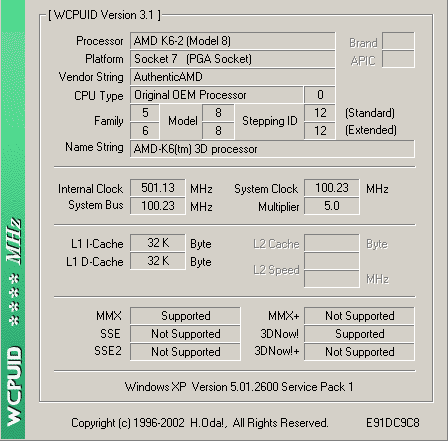
Our system with the AMD
K6-2/500.
BACK | NEXT:
K6-2+/400 to K6-2+/550: April 2000 to September
2000



.gif)







.gif)
